Cat Hydrotherapy: Can Cats Benefit from Water Therapy?
When people hear the word hydrotherapy, they often picture dogs swimming in a rehabilitation pool. But what about cats?
While hydrotherapy is less common in cats, it can be an effective rehabilitation tool for carefully selected feline patients. The key is understanding that not every cat is a suitable candidate, and that’s perfectly okay.
At Charis Vets, every rehabilitation plan begins with an individual assessment to determine the safest and most effective treatment for your pet.
What Is Cat Hydrotherapy?
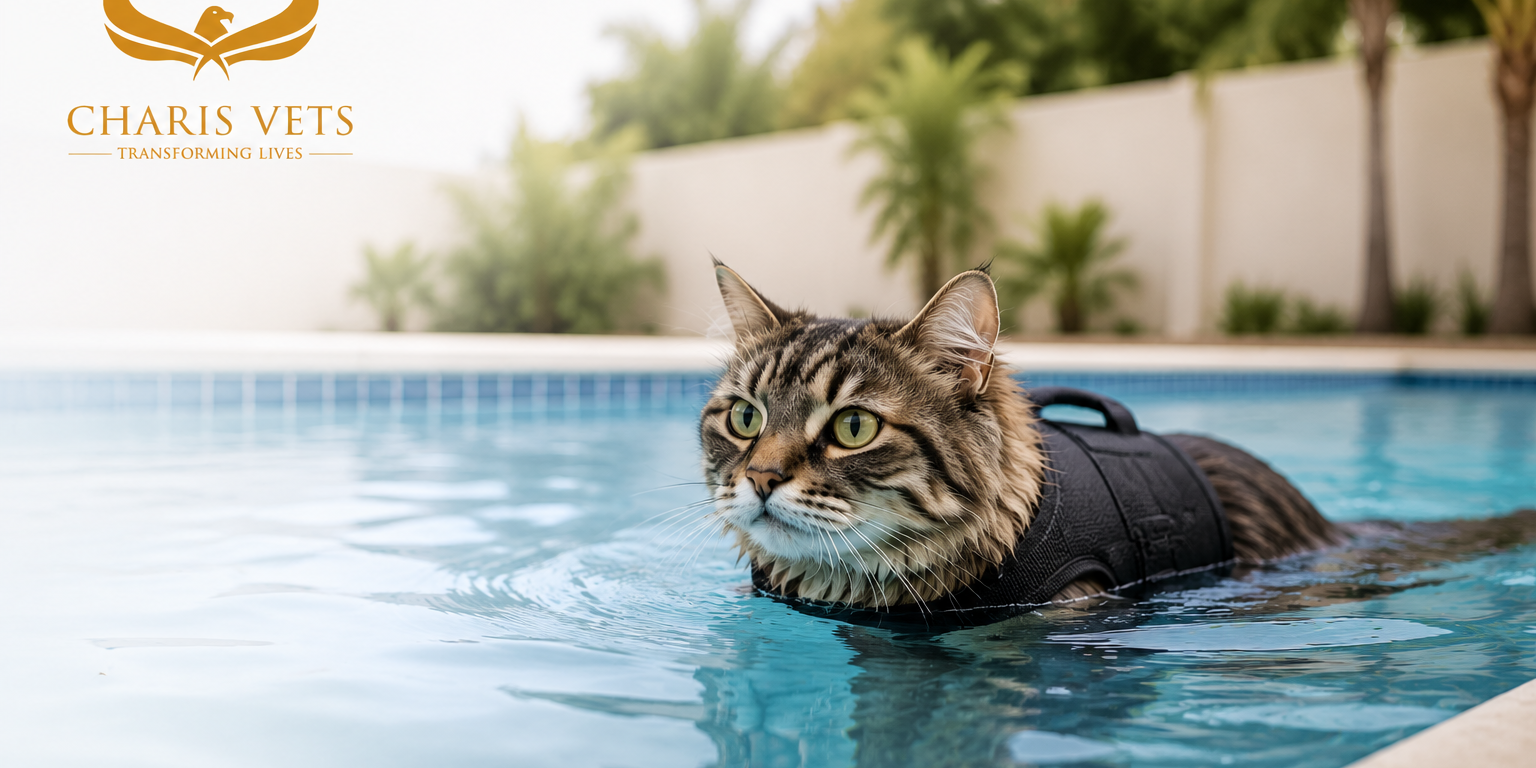
Cat hydrotherapy is a form of veterinary rehabilitation that uses water to support movement while reducing stress on joints and muscles. Depending on your cat’s condition and temperament, therapy may involve an underwater treadmill or carefully supervised aquatic exercises.
The buoyancy of water helps reduce weight-bearing, allowing cats to move more comfortably while improving muscle strength, mobility, and coordination.
Can All Cats Have Hydrotherapy?
The short answer is no.
Unlike dogs, many cats naturally dislike water. Forcing a fearful cat into hydrotherapy can create unnecessary stress and may do more harm than good.
That’s why a thorough veterinary assessment is essential before beginning any rehabilitation programme. During this assessment, we evaluate:
- Your cat’s medical condition
- Mobility and gait
- Pain levels
- Temperament around water
- Overall suitability for hydrotherapy
If hydrotherapy isn’t the best option, we will recommend alternative rehabilitation techniques that better suit your cat’s needs.
Conditions That May Benefit from Cat Hydrotherapy
When appropriate, hydrotherapy may be recommended for cats recovering from or managing:
- Orthopaedic injuries
- Arthritis
- Neurological conditions
- Muscle weakness
- Weight management programmes
- Post-operative rehabilitation
Each rehabilitation programme is tailored to your cat’s individual condition and progress.
How Does Hydrotherapy Help?
Low-Impact Exercise
Water supports your cat’s body weight, reducing pressure on painful joints while encouraging natural movement.
Builds Muscle Strength
The gentle resistance created by water helps strengthen muscles without placing excessive strain on healing tissues.
Improves Mobility
Hydrotherapy encourages controlled movement, helping improve flexibility, balance, and coordination.
Supports Weight Management
For overweight cats that struggle with traditional exercise, hydrotherapy may provide a low-impact way to increase activity levels when appropriate.
What Happens During a Hydrotherapy Session?
Every session is carefully supervised by trained veterinary professionals.
A typical appointment includes:
- A review of your cat’s progress
- Gentle introduction to the rehabilitation equipment
- Carefully monitored exercise
- Regular assessment of comfort and stress levels
Sessions are always adapted to your cat’s tolerance and clinical needs. If a cat becomes stressed, therapy is adjusted or stopped. Your pet’s welfare always comes first.
Is Hydrotherapy Safe for Cats?
When performed under veterinary supervision and after a proper assessment, hydrotherapy can be a safe rehabilitation option for suitable feline patients.
However, it may not be recommended for cats with certain medical conditions or those that experience significant anxiety around water.
This is why every rehabilitation journey begins with a consultation and personalised treatment plan.
Frequently Asked Questions
My cat hates water. Can they still have hydrotherapy?
Many cats are naturally water-averse. During your assessment, we evaluate whether hydrotherapy is appropriate. If your cat is uncomfortable or distressed, alternative rehabilitation options may be recommended instead.
Is hydrotherapy painful?
No. Hydrotherapy is designed to provide gentle, controlled exercise that supports movement while minimising stress on joints and muscles.
How many sessions will my cat need?
The number of sessions depends on your cat’s diagnosis, recovery goals, and response to treatment. Your veterinarian will develop a personalised rehabilitation plan.
Will my cat be forced into the water?
Absolutely not. Your cat’s comfort and wellbeing are always our priority. Rehabilitation should be a positive experience, and therapy is only continued if your cat is coping well.
Helping Your Cat Move Comfortably Again
Every cat is different, and so is every rehabilitation journey.
If your cat is recovering from surgery, managing arthritis, or experiencing mobility issues, our team can assess whether hydrotherapy is the right option or recommend an alternative treatment plan tailored to their needs.
Wondering if hydrotherapy is right for your cat? Contact Charis Vets today to book a rehabilitation assessment.