
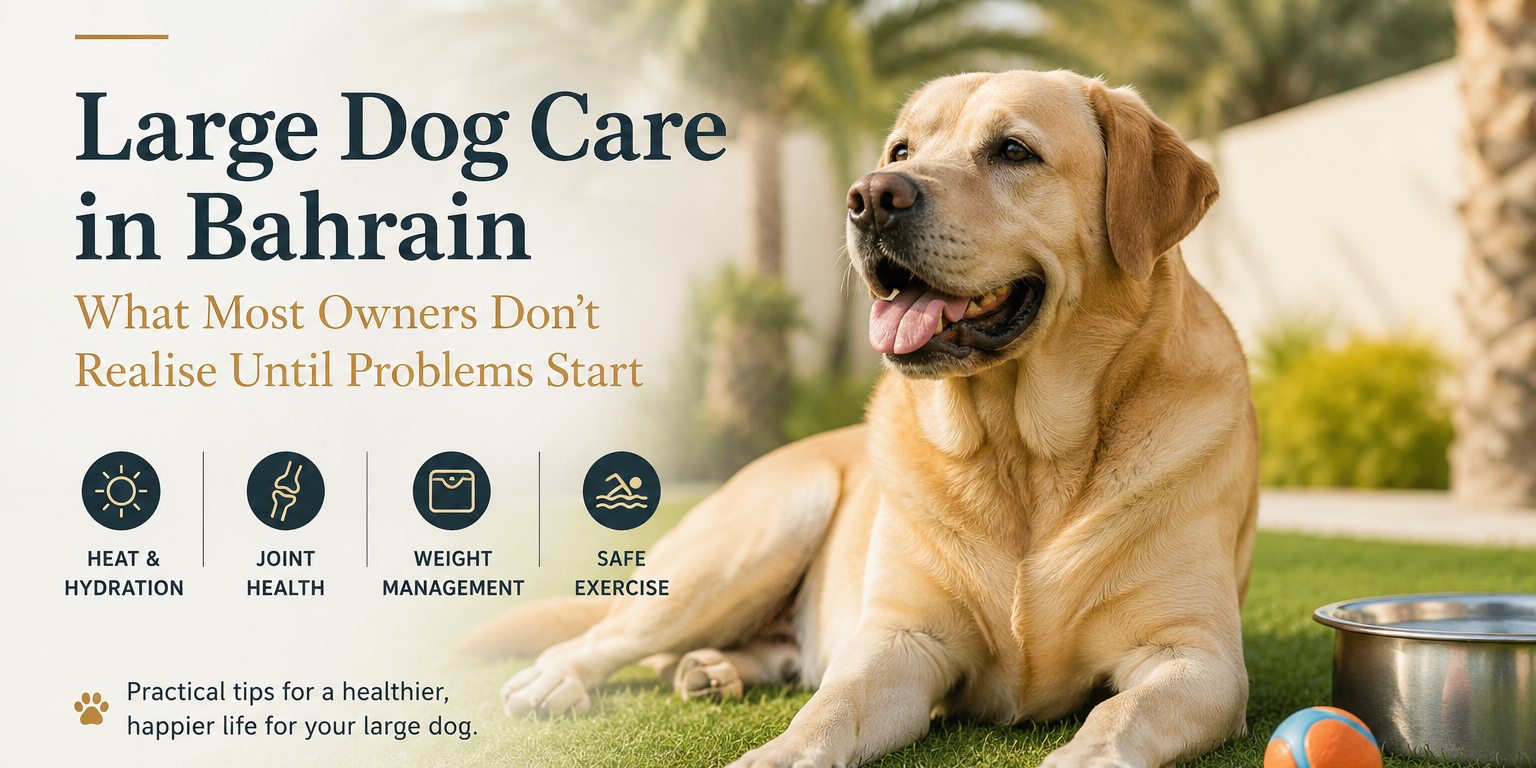
Large dogs are incredible companions, loyal, affectionate, and deeply connected to their families. But in Bahrain, caring for a large-breed dog comes with challenges many owners don’t fully realise until mobility or health problems begin to appear.
At Charis Vets, we often see issues develop gradually rather than suddenly. A little extra weight, slippery tile floors, reduced summer exercise, or repeated jumping can quietly place strain on joints over time. Because large dogs are naturally stoic, discomfort is often missed until stiffness, limping, or fatigue becomes obvious.
Bahrain’s Climate Plays a Bigger Role Than People Think
Many large breeds like Labrador Retriever, Golden Retriever, and German Shepherd are not naturally built for long periods of Gulf heat. During Bahrain’s hotter months, dogs tend to exercise less, gain weight more easily, and lose muscle tone. All of which place additional stress on the joints.
One of the most common problems we see is gradual weight gain. Even a few extra kilograms can significantly increase pressure on the hips, knees, and spine of a large dog. Many owners assume their dog is “just big,” when in reality excess weight may already be affecting mobility and long-term joint health.
The Hidden Problem Inside Many Homes
Smooth tile flooring is another overlooked issue in Bahrain homes. Large dogs often slip slightly while turning, standing, or getting up after rest. Over time, this repeated strain can worsen joint stress and contribute to orthopedic injuries. Simple home adjustments like rugs, grip mats, orthopedic bedding, or ramps can make a noticeable difference, especially for middle-aged and senior dogs.
Exercise Needs to Be Smarter, Not Harder
In Bahrain, intense outdoor exercise during warmer months is not always ideal for large breeds. Sustainable, low-impact movement is usually far healthier than occasional high-intensity activity.
Short morning walks, controlled evening exercise, swimming, and hydrotherapy are often better options for maintaining muscle strength while reducing stress on the joints. Hydrotherapy in particular can be extremely beneficial for overweight dogs, senior dogs, arthritis patients, and dogs recovering from surgery because it allows movement with far less impact on the body.
Large Dogs Often Age Earlier Than Expected
Many owners are surprised when their dog begins showing signs of aging at just 5–7 years old. Slower movement, stiffness after rest, hesitation with stairs, or reduced enthusiasm for walks are often dismissed as “normal slowing down,” but these can be early signs of discomfort.
Early intervention matters. Supporting joint health, maintaining healthy body weight, and identifying mobility changes early can greatly improve quality of life later on.
Nutrition Matters More Than Supplements
Joint supplements can help, but they are not a replacement for proper weight management and balanced nutrition. This is especially important for large-breed puppies, where overfeeding and rapid growth can increase the risk of orthopedic problems later in life.
Maintaining lean muscle and healthy body condition remains one of the most effective ways to support long-term mobility in large dogs.
Final Thoughts
Large dogs carry a tremendous amount of emotional weight in our lives and a tremendous amount of physical weight on their joints. Small lifestyle adjustments made early can have a major impact later.
At Charis Vets, we believe preventive care is not just about treating illness. It’s about helping pets stay comfortable, active, and mobile for as long as possible, especially the gentle giants who give so much to their families every day.