
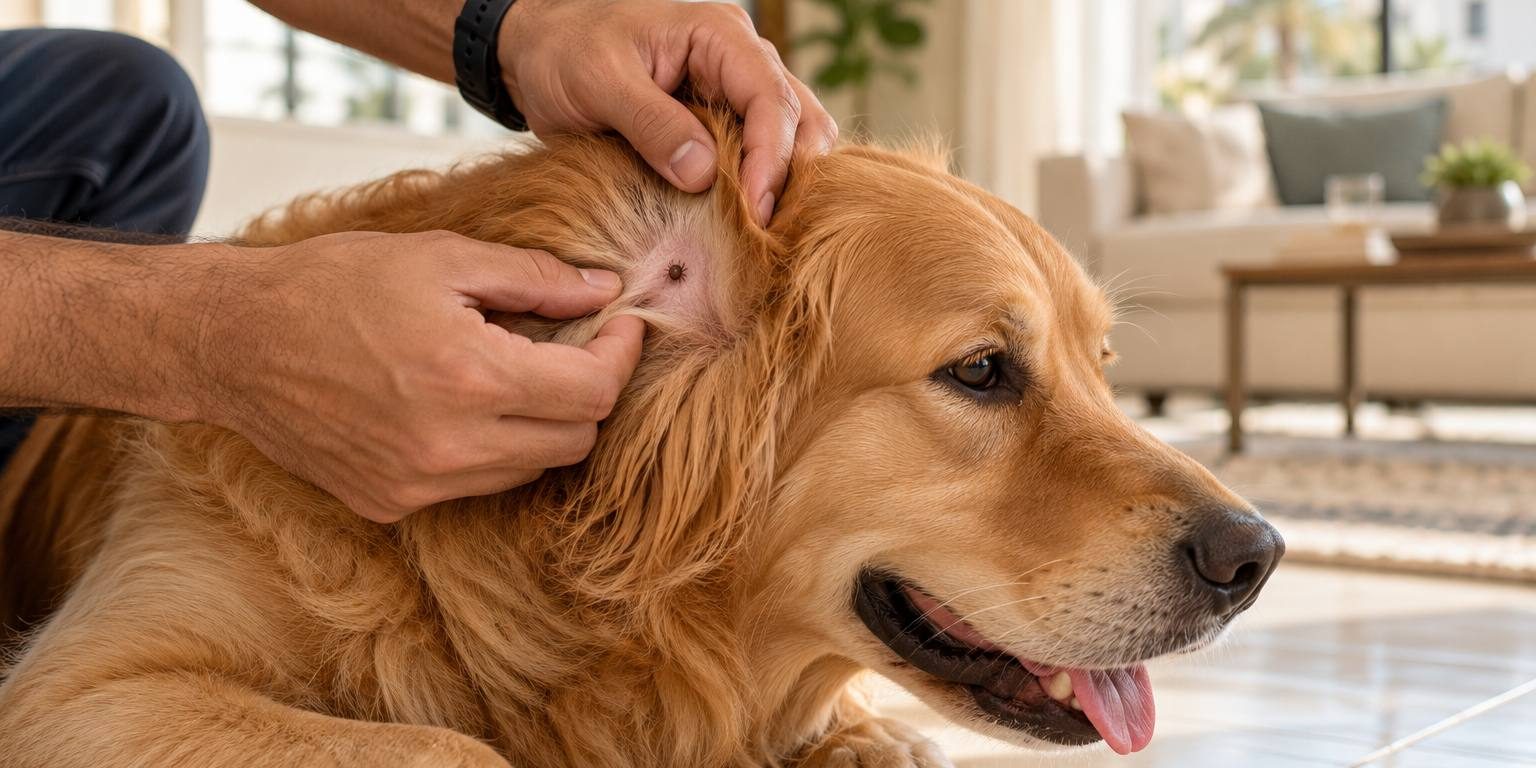
“Tick fever” is one of the phrases dog owners in Bahrain hear most often, and one of the most worrying. It is not a single disease. It is an everyday name for several infections that ticks pass to dogs through their bite. Some are mild if caught early. Others can become serious, and the early signs are easy to miss.
This guide explains what tick fever is, the signs to watch for, how vets diagnose it, and what you can do to protect your dog.
What is tick fever?
When an infected tick feeds on a dog, it can pass on tiny organisms that live in the blood. The most common tick-borne diseases in dogs in warm climates like the Gulf are:
- Ehrlichiosis, a bacterial infection that affects white blood cells and often lowers the number of platelets, the cells that help blood clot.
- Babesiosis, caused by a parasite that infects and destroys red blood cells, which can lead to anaemia.
- Anaplasmosis and hepatozoonosis, which are less common but can cause similar signs.
A dog can have more than one of these at the same time. Because the signs overlap, owners and vets often use “tick fever” as a shorthand until tests show exactly what is going on.
Why ticks are a year-round concern in Bahrain
The tick most often found on dogs in hot countries is the brown dog tick. Unlike many tick species, it is well suited to living indoors and around homes. It can complete its life cycle in kennels, garden walls, cracks in floors and furniture, so an infestation can build up inside a house or villa without your dog ever walking through long grass.
Bahrain’s warm weather means ticks can stay active for most or all of the year. Many owners only think about ticks in summer. In practice, protection usually needs to continue through the cooler months too. Your vet will advise what suits your dog.
Signs of tick fever to watch for
Signs can appear days to weeks after a tick bite, and some dogs show only vague changes at first. Look out for:
- tiredness, sleeping more or not wanting to walk
- eating less or refusing food
- fever (your dog may feel hot, shiver or seek cool places)
- pale gums instead of a healthy pink
- nosebleeds, or small red spots or bruises on the gums, belly or inner ears
- blood in the urine, or very dark urine
- weight loss, swollen glands, or stiffness and reluctance to move
- yellow tinge to the gums or whites of the eyes
Ehrlichiosis in particular can go quiet for months after the first illness and then return as a more serious, long-term problem. This is one reason vets take mild signs seriously, especially if your dog has had ticks.
When to see a vet urgently
Contact a vet the same day if your dog has pale or white gums, a nosebleed that does not stop, red or dark urine, weakness or collapse, or fast or laboured breathing. These can be signs of severe anaemia or a bleeding problem and need prompt treatment.
How vets diagnose tick fever
Your vet will start with a full examination, including checking your dog’s gums, temperature, glands and skin for ticks. Blood tests are usually needed to confirm the diagnosis. Depending on your dog’s signs, these may include:
- a complete blood count to check red cells, white cells and platelets
- a look at a blood sample under the microscope, where some parasites can be seen
- rapid tests or laboratory tests that detect a specific infection or the dog’s response to it
- blood chemistry to check how organs such as the liver and kidneys are coping
Sometimes the first tests are negative even though a tick-borne infection is likely, especially very early in the illness. Your vet may recommend repeating a test or sending a sample for more detailed analysis.
Treatment and recovery
Tick-borne diseases are treated with prescription medication chosen by your vet for the specific infection. Many dogs need a course lasting several weeks. Dogs that are very anaemic or have severe bleeding problems may need hospital care, and occasionally a blood transfusion.
Most dogs that are diagnosed and treated early recover well. Follow-up blood tests are often recommended to make sure blood counts return to normal. Please do not use leftover medicine or treatments suggested online. Giving the wrong treatment can hide signs, delay the right care and, with some medicines, cause harm.
How to protect your dog from ticks
- Use vet-recommended tick prevention, all year. There are several types, including spot-ons, tablets and collars. Your vet will help you choose one based on your dog’s age, weight, health and lifestyle. Give it on time; a late dose leaves a gap in protection.
- Check your dog daily. Run your hands over the whole body, paying attention to the ears, between the toes, the neck, armpits and groin. Ticks can be as small as a sesame seed before they feed.
- Remove ticks properly. Use a tick-removal tool or fine-tipped tweezers, grip close to the skin and pull steadily without twisting or squeezing the body. Do not burn ticks or cover them with oil or alcohol. If you are unsure, or the head stays in the skin, ask your vet.
- Treat the home, not just the dog. If you find ticks repeatedly, check bedding, kennels, wall cracks and outdoor areas. Wash bedding on a hot cycle and ask your vet about safe ways to tackle an infestation.
- Take care with new dogs. A newly adopted or rescued dog should have a vet check and tick prevention before mixing with your other pets.
Frequently asked questions
Can tick fever spread from my dog to me or my other dogs?
These infections are spread by ticks, not by normal contact between dogs or between dogs and people. But if one dog has ticks, your other pets are likely to be exposed too, so check and protect all of them.
My dog is on tick prevention. Can it still get tick fever?
No product is 100% effective, and protection can drop if a dose is late. If your dog shows any of the signs above, see your vet even if it is on prevention.
Can a dog get tick fever more than once?
Yes. Recovering from one infection does not prevent a dog from catching it again or picking up a different tick-borne disease. Ongoing prevention is still important after treatment.
Do cats get tick fever?
Ticks bite cats less often than dogs, and tick-borne disease is less common in cats. If you find a tick on your cat, or your cat seems unwell, ask your vet. Never use a dog tick product on a cat, as some are toxic to cats.
Worried about ticks or tick fever?
If your dog has had ticks and seems tired, off food or pale, it is worth getting checked sooner rather than later. Our team in Budaiya offers wellness exams, laboratory tests and diagnostic imaging, and can advise on the right tick prevention for your dog. For urgent signs, our guide on caring for your pet in an emergency may also help. Call us on 13106800, message us on WhatsApp at 33620201, or book an appointment online.
Reviewed by Dr. Melvin Varghese Jacob, BVSc & AH, MVSc, F.VMAS, General, Ophthalmic & Laparoscopic Surgeon at Charis Vets. Meet our vets