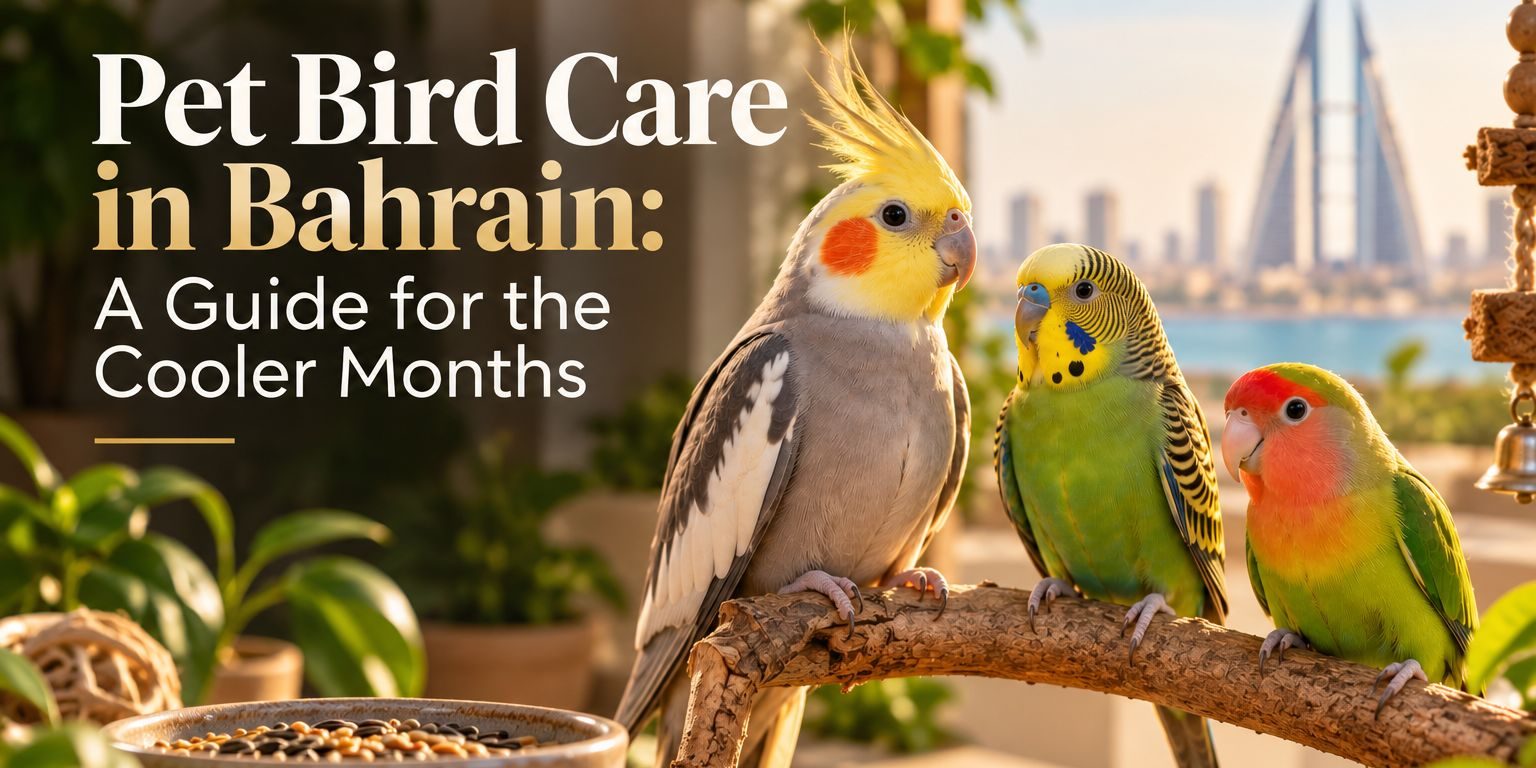
Parrots, budgies, cockatiels, lovebirds and canaries are wonderful companions, yet they are also masters at hiding illness. In this guide our vets share practical advice on keeping your bird healthy through the cooler months, the warning signs to watch for, and when it is time to see a bird vet in Bahrain.
Why birds need a different kind of attention
In the wild, a bird that looks weak attracts predators. Pet birds still carry that instinct, so they often keep up a normal appearance until an illness is quite advanced. By the time a bird looks obviously unwell, it may already be seriously ill.
Birds also have a highly efficient respiratory system, which makes them far more sensitive than dogs or cats to fumes, smoke and changes in air quality. Small changes in their environment can therefore have a big effect on their health.
This is why routine check-ups and a watchful eye at home matter so much: noticing small changes early can make a real difference.
Seasonal care tips for the cooler months in Bahrain
Watch out for draughts and sudden temperature swings
Autumn and winter in Bahrain can bring warm days followed by noticeably cooler nights. Birds cope best with steady conditions, so try to avoid placing the cage directly beside an open window, an outside door or the airflow from an air-conditioning unit. Keep the cage against a wall in a room where the family spends time, so your bird feels part of the household without sitting in a draught.
If your bird lives on a balcony or in an outdoor aviary, check that there is shelter from wind and that it can retreat to a protected area in the evening. Bring indoor birds back inside well before the temperature drops at night.
Be careful with fumes, smoke and fragrances
Cooler weather often means more cooking, more gatherings at home and more use of air fresheners, scented candles or bakhoor. Smoke and strong fragrances can irritate a bird’s airways, so keep your bird well away from the kitchen and from any room where incense, candles or aerosol sprays are being used.
Non-stick cookware deserves a special mention. When non-stick pans are overheated, they can release fumes that are dangerous to birds. Keep birds out of the kitchen altogether, ventilate well when cooking and never leave an empty non-stick pan on a hot hob.
Supervise time out of the cage
Pleasant weather tempts owners to let birds out more, and doors and windows are opened more often. Before any time out of the cage, close windows and outside doors, switch off ceiling fans and make sure other pets are in a different room. Escaped birds are, sadly, a common problem when the weather changes.
Diet: the foundation of good bird health
Many health problems in pet birds can be traced back to diet. Seed-only diets are common, but on their own they are usually not enough to keep a bird healthy over the long term. A balanced diet for most pet birds includes a suitable formulated food alongside fresh vegetables, with fruit and seeds offered in smaller amounts.
Every species has its own needs, so the right balance for a budgie is different from that for a larger parrot. If you would like help moving your bird onto a better diet, our team can advise you safely and gradually, as sudden changes can upset some birds.
Always provide fresh, clean water every day, and wash food and water bowls regularly.
Signs your bird may be unwell
Because birds hide illness so well, any of the following signs deserve prompt attention from a vet:
- Fluffed-up feathers for long periods, or sleeping more than usual
- Sitting on the floor of the cage
- Changes in the colour, amount or consistency of droppings
- Eating less, or weight loss you can feel over the breastbone
- Tail bobbing with each breath, open-mouth breathing or clicking sounds
- Discharge from the eyes or nostrils, or sneezing
- Feather plucking or damaged, dull feathers
- Being unusually quiet, or a change in voice
If you notice any of these, please do not wait to see if things improve. A sick bird can go downhill quickly. Keep your bird warm and quiet and contact us straight away. You can contact us here or call 13106800.
What happens at a bird check-up?
A routine check-up is a good idea for any new bird and for existing birds on a regular basis. During the visit, the vet will usually:
- Ask about your bird’s diet, housing, behaviour and daily routine
- Weigh your bird, as small changes in weight can be an early sign of illness
- Examine the eyes, nostrils, beak, feathers, skin, feet and vent
- Listen to the heart and breathing
- Recommend further tests, such as laboratory tests or imaging, if needed
You can find out more about the care we offer on our services page.
Tips for bringing your bird to the clinic
- Use a small, secure travel carrier, or bring your bird in its own cage if it is easy to transport
- Cover part of the carrier with a light cloth to help your bird feel calmer
- Keep the car at a comfortable temperature and avoid leaving your bird in a parked car
- Do not clean the cage just before the visit, as fresh droppings can help the vet
Some birds find travel stressful. In that case, our home visit service may be a gentler option.
Frequently asked questions
How often should my bird see a vet?
We recommend a check-up when you first bring a bird home and regular routine check-ups after that. Your vet will advise how often based on your bird’s species, age and health.
Is the cooler weather in Bahrain dangerous for pet birds?
Mild weather is not usually a problem in itself, but sudden temperature changes, cold draughts and chilly nights outdoors can stress birds. Keep the cage away from draughts and bring outdoor birds into shelter in the evening.
My bird only eats seeds. Is that a problem?
Seeds alone usually do not provide a complete diet. Speak to our team about gradually introducing a more balanced diet suited to your bird’s species.
Book a check-up for your bird
Whether you have a new budgie or a long-time parrot companion, our team in Budaiya is here to help keep your bird healthy all year round. Call us on 13106800, message us on WhatsApp at 33620201, or book an appointment online.
Reviewed by Dr. Hansel Geo Thomas, BVSc & AH, MS (UK), F.VMAS, Founder and Specialist Laparoscopy & Gynaecology Surgeon at Charis Vets. Meet our vets