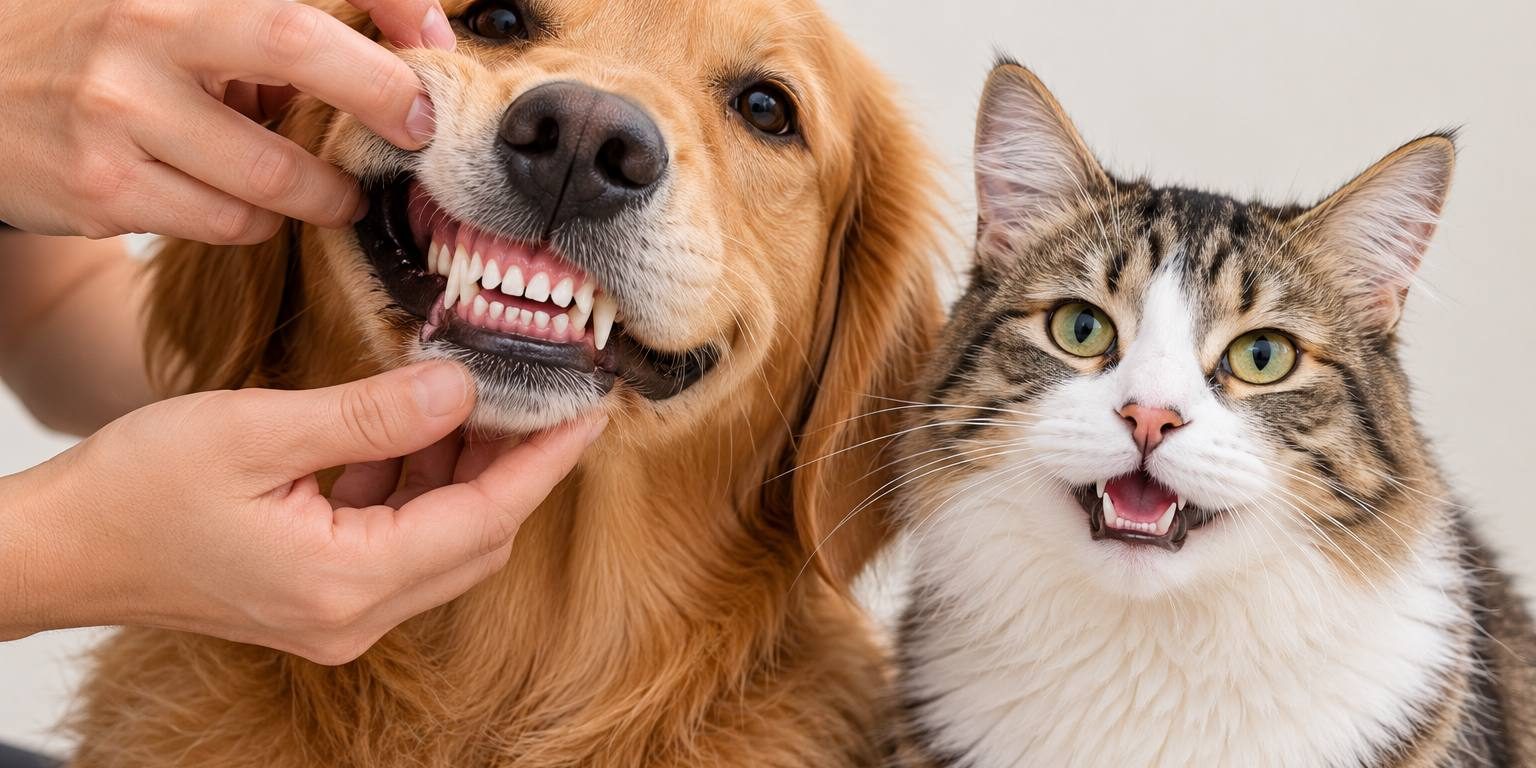
If your vet has suggested a dental clean for your dog or cat, you probably have a few questions. Why does it need an anaesthetic? What actually happens while your pet is asleep? And what will they be like when they come home?
This guide explains a professional dental clean from start to finish: how to prepare, what happens, and how to care for your pet afterwards.
Why a dental clean is more than a “polish”
Dental disease is one of the most common problems vets see in adult dogs and cats. It starts with plaque, a soft film of bacteria that hardens into tartar. The tartar you can see on the tooth surface is only part of the story. The real damage happens below the gum line, where bacteria cause inflamed gums, infection around the roots and, eventually, loose and painful teeth.
Pets are very good at hiding mouth pain. Many keep eating even with sore teeth, simply chewing on one side or swallowing food whole. Once sore teeth are treated, many owners notice their pet seems brighter or more playful, a sign of how much discomfort had been quietly building up.
A professional dental clean treats the parts of the tooth you cannot reach at home, and gives your vet a chance to examine every tooth properly.
Why a general anaesthetic is needed
This is one of the most common questions owners ask. A thorough clean means working below the gum line with instruments, checking each tooth from every side and, where needed, removing diseased teeth. No dog or cat will keep still for that, and trying to do it awake would be stressful and painful.
A general anaesthetic also protects your pet’s airway. A breathing tube is placed so that water, tartar and bacteria loosened during cleaning cannot be breathed into the lungs.
What about anaesthesia-free cleaning?
Some places offer “anaesthesia-free” scaling, where tartar is scraped off the visible tooth surface while the pet is held still. It can make teeth look whiter, but it cannot clean below the gum line, where disease does its harm, and it does not allow a proper examination. Veterinary dental specialists generally advise against it for this reason. A clean-looking tooth can still have a painful problem at the root.
Before the day
Your vet will examine your pet first, talk you through what they can see, and check that your pet is fit for an anaesthetic. For older pets, or those with other health conditions, this may include blood tests.
A few practical points help the day go smoothly:
- Follow the fasting instructions exactly. Your vet will tell you when to remove food. Water is usually allowed until a set time, but check.
- Mention any medicines or supplements your pet takes, and any reactions to past anaesthetics or sedation.
- Keep your phone on. Your vet may need to call you during the procedure if they find teeth that need to come out.
- Plan the journey. For much of the year in Bahrain, a cool, air-conditioned car matters, both on the way in and on the way home, when your pet will be drowsy and less able to cope with heat.
What happens during the procedure
Every clinic’s routine varies a little, but a professional dental clean usually involves these steps.
1. Anaesthetic and monitoring
Your pet is given a carefully chosen anaesthetic and a breathing tube is placed. Vital signs such as heart rate, breathing and oxygen levels are monitored throughout, and your pet is kept warm.
2. A full mouth examination
With your pet asleep, the vet can check every tooth, the gums and the rest of the mouth. They look for gum pockets, fractures, loose teeth, and in cats, tooth resorption, a common and painful condition in which the tooth structure is gradually broken down. Your vet may recommend dental X-rays, as many problems sit below the gum line and cannot be seen by eye alone.
3. Scaling above and below the gum line
Tartar is removed from the tooth surfaces, then the vet cleans carefully under the gum line, where the most important work is done.
4. Polishing
Scaling leaves tiny scratches on the enamel. Polishing smooths these out, so plaque is slower to stick to the teeth again.
5. Treatment of problem teeth
If a tooth is badly diseased, fractured or painful, removing it is often the kindest option. Dogs and cats manage very well with fewer teeth, and much better than with a sore one. Your vet will explain what they found and agree the plan with you.
Bringing your pet home
Most pets go home the same day. Expect them to be sleepy and a little unsteady that evening. Let them rest somewhere cool and quiet, away from stairs and other pets.
- Food: offer a small meal that evening if your vet advises it. If teeth were removed, you will usually be told to give soft food for a period while the gums heal.
- Medicines: give any pain relief or other medicines exactly as prescribed. Do not give human painkillers, which can be dangerous to pets.
- Chews and toys: hold back hard chews and tough toys until your vet says the mouth has healed.
- Check-up: attend any follow-up appointment, especially after extractions, so the vet can check healing.
When to call the vet
Contact the clinic promptly if your pet:
- is not eating at all by the day after the procedure
- has bleeding from the mouth that does not stop, or more than a little blood-tinged saliva
- develops swelling of the face or jaw
- is very lethargic, vomiting repeatedly or struggling to breathe
- is pawing at the mouth or seems in pain despite their medicine
If you are worried, call us on 13106800 or see our contact page.
Keeping teeth healthy afterwards
A professional clean gives your pet a fresh start, but plaque begins to build again within days. Home care is what makes the result last.
- Brushing is the most effective home care. Daily is ideal, but a few times a week still helps. Use a toothpaste made for pets, never human toothpaste, and start slowly with lots of praise.
- Dental diets and chews can help some pets, but they support brushing rather than replace it. Ask your vet which products suit your pet, and avoid very hard items such as bones and antlers, which can break teeth.
- Regular check-ups let your vet spot problems early, when they are simpler to treat. Small breeds, flat-faced breeds and older pets often need closer attention.
Frequently asked questions
Is my pet too old for an anaesthetic?
Age on its own is not a reason to avoid treatment. What matters is your pet’s overall health, which is why a pre-anaesthetic assessment is so important. Older pets often benefit the most, because they have lived with dental disease the longest. Your vet will discuss any extra precautions with you.
How often will my pet need a dental clean?
It varies a great deal. Some pets with good home care need one only occasionally; others, particularly small breeds, need treatment more often. Your vet will advise based on what they see at check-ups, which should be at least once a year.
Will my pet be able to eat normally with fewer teeth?
Yes. Most dogs and cats eat comfortably after healing, even if several teeth have been removed. Many eat better than before, because the source of pain has gone.
Book a dental check in Bahrain
If you have noticed bad breath, tartar, red gums or a change in how your pet eats, a dental check is a good place to start. Read more about our pet dentistry services, or see our guide to vet costs in Bahrain to help you plan ahead.
To book, call 13106800, message us on WhatsApp at 33620201, or book an appointment online.
Reviewed by Dr. Melvin Varghese Jacob, BVSc & AH, MVSc, F.VMAS, General, Ophthalmic & Laparoscopic Surgeon at Charis Vets. Meet our vets