Booking a spay is a big decision, and most owners have the same question once the date is in the diary: what will recovery actually look like? If your vet has recommended a keyhole (laparoscopic) spay, the good news is that recovery is usually gentler than after a traditional open spay. But “gentler” does not mean “no aftercare”. The first couple of weeks at home still matter a great deal.
This guide walks you through what to expect after a keyhole spay, from the car journey home to the post-operative check, with practical tips for caring for your dog or cat in Bahrain.
What is a keyhole spay?
A spay is the surgical neutering of a female dog or cat. In a traditional spay, the surgeon makes a single larger incision along the belly. In a keyhole spay, the surgeon instead makes a few small incisions and uses a tiny camera (a laparoscope) and fine instruments, watching a magnified image on a screen.
Because the wounds are smaller and there is less handling of the tissues, many pets are brighter and more comfortable in the days after surgery. You can read more about keyhole surgery and our other services on our services page. This article focuses on what happens once your pet comes home.
Before the day: a little preparation helps
A calm recovery starts before surgery. A few things worth sorting out in advance:
- Follow the fasting instructions your vet gives you exactly. They exist to keep the anaesthetic as safe as possible.
- Prepare a quiet recovery space indoors, away from stairs, other pets and busy family areas. A crate or small room works well for dogs; a cosy, low-sided bed in a quiet room suits most cats.
- Plan for the heat. In Bahrain, the recovery area should be cool and air-conditioned, with fresh water within reach.
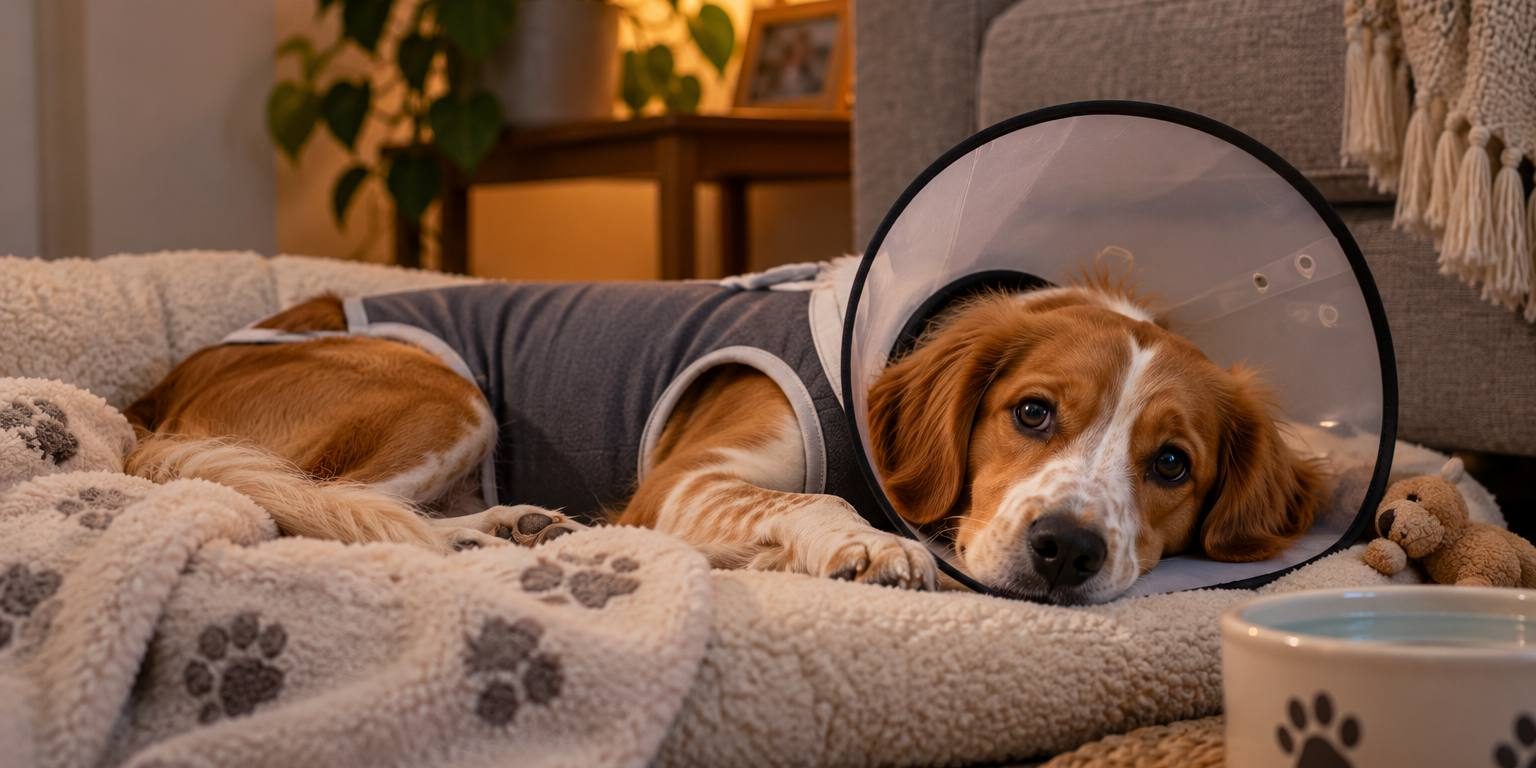
- Ask about wound protection. Your vet may send your pet home with a cone (buster collar) or a recovery body suit. Knowing which one in advance means you will not be caught off guard.
The first 24 hours at home
Most pets go home the same day after a keyhole spay. It is completely normal for them to be quiet, a little wobbly or sleepy that evening, as the effects of the anaesthetic wear off.
Rest and quiet
Let your pet settle in their recovery space and sleep. Keep children and other animals away so they are not disturbed, and avoid letting them jump on or off furniture.
Food and water
Your vet will tell you when and how much to feed. Many pets are offered a small, light meal that evening. Do not worry if your pet is not very interested in food on the first night; appetite usually returns by the next day. If it does not, give us a call.
Pain relief
Your pet will usually go home with pain relief. Give it exactly as prescribed, and never give human painkillers, as several common ones are dangerous for dogs and cats.
Days 2 to 7: the important first week
This is when owners often notice how quickly their pet seems to bounce back after keyhole surgery, and it is also when the most common problems happen. A pet who feels well is a pet who wants to run, jump and lick.
Keep activity limited
Even if your dog feels ready for a long walk, the tissues inside are still healing. Short, calm lead walks for toileting are usually all that is advised for the first week or so, with no running, jumping, rough play or off-lead time. For cats, keep them indoors and discourage climbing onto high surfaces. Your vet will give you a timeline that suits your individual pet.
Stop licking and chewing
Licking is one of the main reasons wounds become sore or infected. Keep the cone or body suit on as instructed, even if your pet looks miserable in it. It is only for a short time, and it protects all the good work done in surgery.
Check the wounds once or twice a day
Have a quick look at the small incisions each day. They should look clean and dry and gradually settle. Do not bathe your pet or apply creams unless your vet has told you to.
Signs to watch for
Most keyhole spay recoveries are smooth, but it is important to know when to get in touch. Contact us promptly if you notice:
- Bleeding, discharge or a bad smell from a wound
- Increasing swelling, redness or heat around an incision
- A wound that has opened, or stitches that have been chewed
- Vomiting, diarrhoea, or refusing food for more than a day
- Lethargy that is getting worse rather than better
- Pale gums, breathing difficulties or signs of severe pain
If something seems seriously wrong out of hours, do not wait. Call us on 13106800 or see our contact page.
The post-operative check
Your vet will normally book a check-up a few days to around two weeks after surgery, depending on the type of stitches used and how your pet is healing. At this visit we look at the wounds, check your pet’s general health and let you know when normal exercise, play and bathing can resume.
Please keep this appointment even if everything looks perfect. It is quick, reassuring and a good moment to ask any questions.
Recovery tips for dogs and cats in Bahrain
- Walk at the coolest times of day. Early morning and late evening toilet trips are kinder to a recovering pet, especially in the warmer months.
- Keep sand and dust away from the wounds. Avoid the beach, sandy gardens and building sites until your vet confirms the incisions have healed.
- No swimming or pool time until you have been given the all-clear.
- Use puzzle feeders and gentle training to keep active dogs mentally busy while their exercise is restricted.
- Bigger, bouncier dogs need extra supervision. If you share your home with a large breed, our guide to large dog care in Bahrain has more ideas on managing their energy safely.
Frequently asked questions
Is a keyhole spay suitable for cats as well as dogs?
The right approach depends on your individual pet’s species, size, age and health. Our surgeons will talk you through the options at your consultation and recommend what is best for your pet.
Will my pet need to wear a cone?
Usually, yes, or a recovery body suit. Even small keyhole wounds can be irritated by licking, so some form of protection is normally recommended until your vet is happy with healing.
When can my dog go back to normal walks?
This varies from pet to pet. Your vet will advise at the post-operative check when it is safe to build back up to normal exercise and off-lead play.
Book a keyhole spay consultation in Bahrain
If you are considering spaying your dog or cat, or you would like to know whether keyhole surgery is right for your pet, our team in Budaiya is happy to help. Call us on 13106800, message us on WhatsApp at 33620201, or book an appointment online.
Reviewed by Dr. Hansel Geo Thomas, BVSc & AH, MS (UK), F.VMAS, Founder and Specialist Laparoscopy & Gynaecology Surgeon at Charis Vets. Meet our vets