
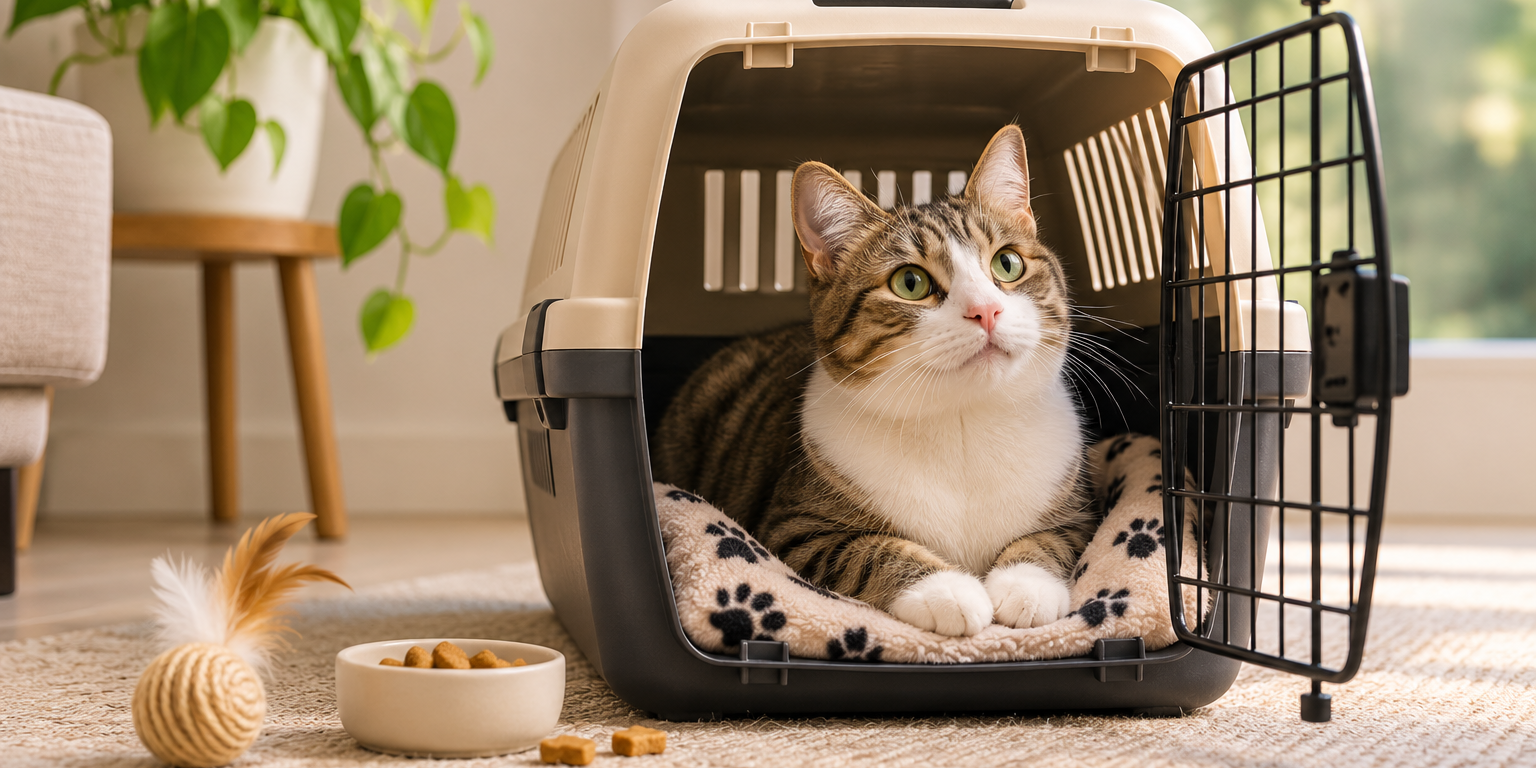
For many cat owners, the hardest part of a vet appointment is getting there. The cat vanishes under the bed when the carrier appears, cries all the way in the car and arrives frightened. It is understandable that check-ups get put off.
The trouble is that cats are very good at hiding illness. Weight loss, dental disease, kidney changes and arthritis often develop quietly, and a routine visit is frequently when they are first noticed. The good news is that most of the stress of a vet trip can be reduced with some preparation at home. This guide walks you through it, step by step.
Why vet visits upset cats
Cats are territorial and like routine. A vet trip takes them out of their territory, through a noisy car journey, into a building full of unfamiliar smells, sounds and other animals, and then onto a table to be handled by strangers. On top of that, many cats only ever see their carrier on the day of a vet visit, so the carrier itself becomes a warning sign.
The aim is to break that link and make each stage of the trip more predictable.
Step 1: Make the carrier a normal part of home
Choose the right carrier
A sturdy, hard-sided carrier that opens from both the front and the top is the most practical choice. If the top half can be lifted off, your vet can often examine a nervous cat while it stays in the familiar bottom half, rather than tipping it out. The carrier should be big enough for your cat to stand up and turn around. Soft bags and cardboard boxes are easy for a determined cat to escape from.
Leave it out, every day
Put the carrier in a room your cat likes, with the door open or removed and a blanket or towel that smells of home inside. Drop treats in it now and then, or feed meals next to it and gradually inside it. Over a week or two, many cats start to nap in it. Some owners find that a synthetic feline calming pheromone spray inside the carrier helps; your vet can tell you whether it is worth trying for your cat.
On the day
- Close bedroom doors and block favourite hiding spots before your cat realises anything is happening.
- Stay calm and avoid chasing, which makes cats harder to catch next time.
- If your carrier opens from the top, lower your cat in gently rather than pushing it through the front door.
Step 2: The car journey
In Bahrain, heat is the first thing to think about. Even in the cooler months, a car parked in the sun warms up quickly, and in summer it can become dangerous within minutes. Run the air conditioning before you put your cat in, and never leave a cat in a parked car.
- Place the carrier in the rear footwell or secure it with a seatbelt on the back seat, so it stays level and cannot slide.
- Cover it loosely with a light towel to reduce what your cat can see, while leaving plenty of airflow.
- Drive smoothly, keep the radio low and talk quietly to your cat if that seems to settle them.
Some cats are less likely to be sick in the car on an emptier stomach. Ask the clinic whether to hold back breakfast, though, because the right answer depends on your cat. Kittens, diabetic cats and cats having certain blood tests may need different advice.
Step 3: At the clinic
When you book, mention that your cat is nervous and ask whether a quieter time of day would suit. Once you arrive:
- Keep the carrier off the floor, on your lap or a chair, and keep it covered.
- Turn it away from dogs and other cats in the waiting area.
- Tell the vet what your cat dislikes, for example having its paws or face touched, so they can plan the examination around it.
What to bring
- A short note of any changes you have noticed: appetite, drinking, litter tray habits, weight, grooming or behaviour, and when they started.
- Videos on your phone of anything that comes and goes, such as coughing, limping, odd breathing or straining in the litter tray. Cats often behave quite differently at the clinic.
- The name of your cat’s food and any medicines or supplements they take.
- Previous vaccination and health records if you are new to the clinic.
Step 4: Coming home
If you have more than one cat, the one returning from the vet may smell unfamiliar, and the others can hiss or even fight. It often helps to let the returning cat settle in a separate room for a few hours, with food, water and a litter tray, before they meet again. Gently stroking all your cats with the same cloth can help to mix their scents. If tension lasts more than a day or two, ask your vet for advice.
Finally, leave the carrier out afterwards. If it stays part of the furniture, the next visit will be easier.
When a home visit may suit your cat better
For some cats, such as very anxious, elderly or frail cats, or households with several cats due for routine care, a vet visit at home can be a gentler option. Charis Vets offers home visits for cats as well as dogs, birds and exotic pets, with blood tests and ultrasound possible at your door. Some procedures, such as surgery, X-rays or anything needing anaesthesia, still need a clinic visit, and your vet will tell you if that is the case.
Do not let stress delay urgent care
Preparation is ideal, but some problems cannot wait. Contact a vet straight away if your cat has any of the following:
- Straining in the litter tray and passing little or no urine, especially in male cats. This can be a urinary blockage, which is an emergency.
- Breathing with the mouth open, or fast, laboured breathing.
- Not eating for more than a day. Cats that stop eating can develop serious liver problems.
- Repeated vomiting, collapse or sudden weakness in the back legs.
- Suspected poisoning. Lilies, for example, are highly toxic to cats, even in small amounts.
- Wounds or swellings after a fight, which can turn into abscesses.
Our emergency vet page has our opening hours and what to do on the way.
How often should a cat see the vet?
As a general guide, healthy adult cats benefit from a check-up at least once a year, and older cats are often seen more frequently because age-related problems can develop quickly. Kittens need a series of visits for vaccinations and early health checks. Your vet will recommend a schedule that suits your cat’s age, lifestyle and health. Routine visits are also a good time to check your cat’s teeth; our guide to dental cleaning for dogs and cats explains what happens if treatment is needed.
Frequently asked questions
Should I give my cat something to calm it before the visit?
Never give your cat human medicines or another pet’s medication, as many are dangerous to cats. For very anxious cats, some vets prescribe medication to be given at home before a visit. This needs to be discussed with your vet in advance, so raise it at your next appointment or call the clinic well before the day.
My cat lives indoors. Does it still need check-ups?
Yes. Indoor cats are protected from some risks, such as traffic and fights, but they can still develop dental disease, weight gain, kidney and thyroid problems and arthritis. Regular checks help to catch these early.
My cat hid and I could not get it into the carrier. What should I do?
Call the clinic to rearrange. Next time, close doors earlier and keep the carrier out between visits. If the problem is urgent and you cannot catch your cat, call for advice; a home visit may be possible.
Book a check-up for your cat
If your cat is due a check-up, or you have noticed a change that is worrying you, our team in Budaiya is happy to help. Call us on 13106800, message us on WhatsApp at 33620201, or book an appointment online. Let us know if your cat is nervous so we can plan the visit with that in mind.
Reviewed by Dr. Hansel Geo Thomas, BVSc & AH, MS (UK), F.VMAS, Founder and Specialist Laparoscopy & Gynaecology Surgeon at Charis Vets. Meet our vets