
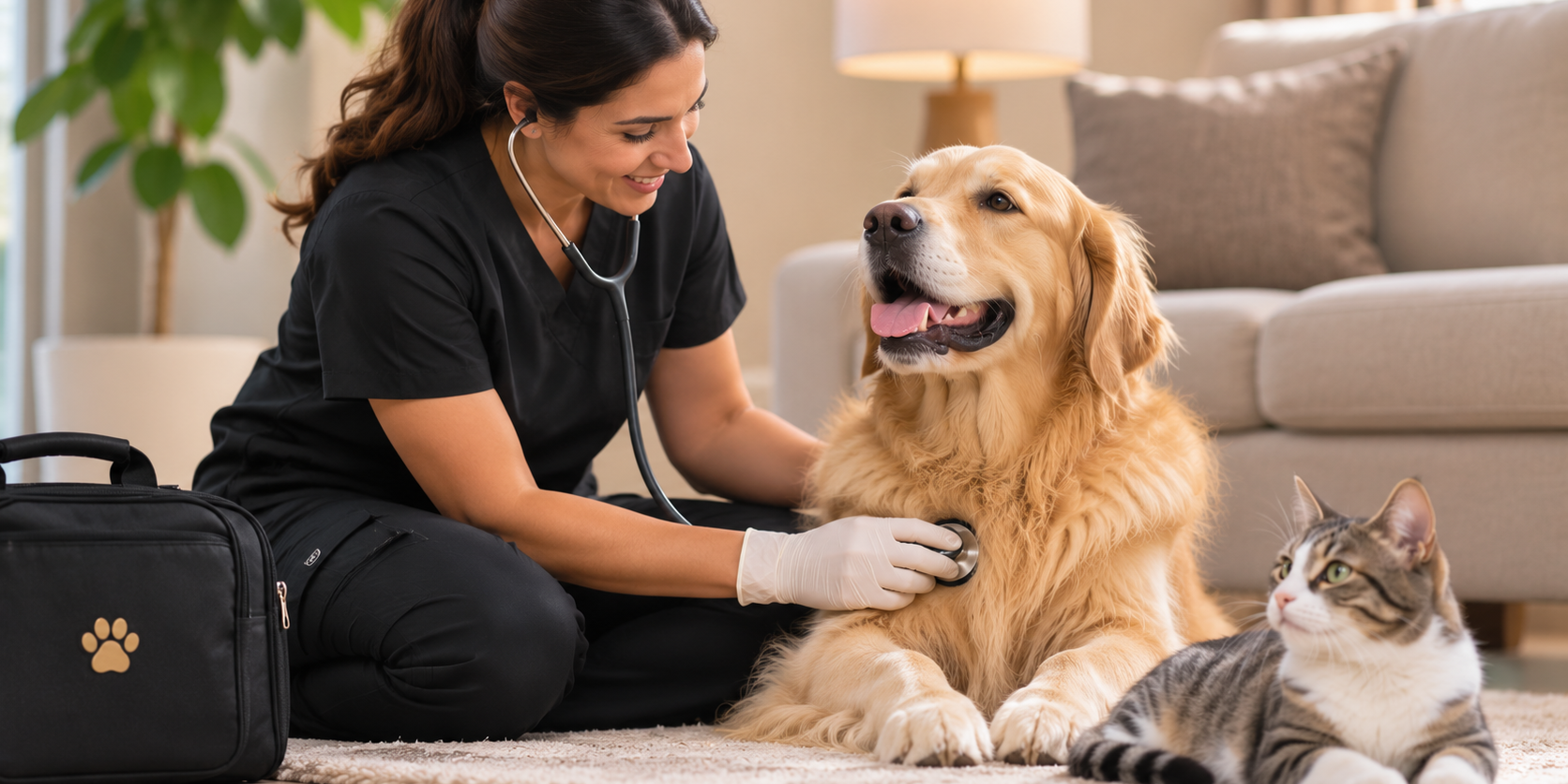
For some pets, the hardest part of seeing a vet is getting there. A cat who fights the carrier, a 45 kg dog who can no longer jump into the car, or a parrot who panics on the drive can arrive at the clinic stressed, which makes the examination harder and the visit more upsetting for everyone.
A home visit brings the vet to you instead. This guide explains when a home visit is a good choice in Bahrain, what can and cannot be done at your door, how to prepare so the visit is worthwhile, and when you should go straight to the clinic instead.
What a vet home visit is
A home visit (or house call) is a veterinary appointment at your home rather than in the clinic. At Charis Vets, home visits are available for dogs, cats, birds, exotic pets and farm animals, and the mobile vet service can carry out everything up to blood tests and an ultrasound scan at your doorstep.
Seeing an animal in its own surroundings can also tell the vet things a clinic visit cannot: how your pet moves on its usual floors and stairs, where it eats and sleeps, how it behaves when it is relaxed, and what its cage or enclosure looks like.
When a home visit makes the most sense
Pets who find travel very stressful
Many cats hide, vocalise or even stop eating after a car journey. Some dogs are carsick or become very anxious in a waiting room. For these pets, being examined at home is often calmer, and a calmer pet is easier to examine properly.
Large, elderly or less mobile dogs
Lifting a large dog with arthritis or weakness into a car is hard on the dog and on your back. For older dogs that are slowing down, a home visit can be a gentler way to keep up regular check-ups.
Birds and exotic pets
Birds, reptiles and small mammals can be sensitive to temperature changes and handling during transport. In Bahrain, a short walk across a hot car park in summer, or an air-conditioned car followed by outdoor heat, is a real stressor for a small animal. A home visit also lets the vet look at the cage, perches, lighting and heating, which are often linked to the health problems they see in these pets. Our birds and exotic pets page explains more about the care we offer.
Households with several pets
If you have three cats due a check-up, getting them all into carriers and to the clinic at once is a challenge. Seeing them together at home can save a lot of effort.
Owners who find the trip difficult
Not everyone has a car, can manage a pet alongside young children, or is able to travel easily themselves. A home visit removes that barrier so your pet still gets seen.
Quality-of-life conversations with older pets
When a pet is very old or living with a long-term illness, some families prefer to talk through their pet’s comfort and options at home, where the pet is settled and everyone can be present. If this is your situation, mention it when you call so the team can plan the visit with you.
When the clinic is the better place
A home visit is not the right choice for everything. Your pet is better seen at the clinic if it needs:
- Emergency care. Difficulty breathing, collapse, signs of heatstroke, heavy bleeding, suspected poisoning, repeated vomiting, a swollen tight belly in a dog, or a cat straining without passing urine all need urgent attention. Do not wait for a home visit; call the clinic and travel in straight away. Our emergency vet page explains what to do.
- Surgery or anaesthesia, including dental cleaning, which need an operating theatre and monitoring equipment.
- Tests or treatment that need larger equipment, such as X-rays or hydrotherapy.
- Hospital care, such as a drip or close observation over several hours.
Sometimes a home visit is the first step and the vet then recommends further tests or treatment at the clinic. That is normal and does not mean the home visit was wasted: you will know what is needed and why.
How to prepare for a home visit
A little preparation means the vet spends the visit on your pet rather than on finding it.
- Keep your pet in one room before the vet arrives. Cats in particular often hide as soon as the doorbell rings. Close the door of a small room with few hiding places an hour or so beforehand.
- Keep birds in their cage and close windows and doors in case one escapes during handling.
- Separate other pets so they do not interrupt or become stressed.
- Write down your questions and what you have noticed: changes in appetite, drinking, toileting, weight or behaviour, and when they started.
- Take a short video of anything that comes and goes, such as a limp, a cough or an odd episode. It may not happen while the vet is there.
- Have records ready: vaccination card, previous test results, current medicines and the food your pet eats.
- Ask whether your pet should be fasted if blood tests or an ultrasound scan are planned. Do not withhold food or water unless the clinic advises it.
- Give clear directions: building or villa number, compound gate details, and where the vet can park.
Is a home visit right for your pet?
As a rule of thumb, a home visit suits a pet that is stable but hard to bring in, or a situation where seeing the home helps. If your pet is unwell and getting worse, or you are unsure whether it is an emergency, call first. The team can help you decide whether a home visit, a clinic appointment or urgent care is the right next step.
Frequently asked questions
Is a home visit as thorough as a clinic appointment?
For a full examination and many common problems, yes. The mobile service can carry out blood tests and ultrasound scans at home. If your pet needs something that requires clinic equipment, such as surgery or X-rays, the vet will explain this and arrange the next steps with you.
Can routine care like vaccinations be done at home?
Many routine check-ups and preventive treatments can be done during a home visit. When you book, say what you would like done so the vet brings everything needed.
Should I book a home visit for an emergency?
No. In an emergency, travelling to the clinic is usually the fastest way to get your pet the equipment and team it needs. Call ahead on the way so the team is ready for you.
My cat hides from visitors. Is there any point?
Yes, as long as your cat is shut in a small room before the vet arrives. Many cats are easier to handle at home than after a car journey, even if they are shy.
Do you visit pets other than cats and dogs?
Yes. Home visits are available for birds, exotic pets and farm animals as well as dogs and cats.
Book a home visit
If getting to the clinic is difficult for your pet, or you would like your pet seen in familiar surroundings, call Charis Vets on 13106800 or message us on WhatsApp on 33620201. You can also book an appointment online. Tell us about your pet and what you would like checked, and we will help you choose between a home visit and a clinic appointment.
Reviewed by Dr. Hansel Geo Thomas, BVSc & AH, MS (UK), F.VMAS, Founder and Specialist Laparoscopy & Gynaecology Surgeon at Charis Vets. Meet our vets